


![[AIM] Asmarino Independent Media](/images/logo/ailogo.png)
Issues and Ideas – Q & A with Suleiman Hussein CDRiE Chairman London
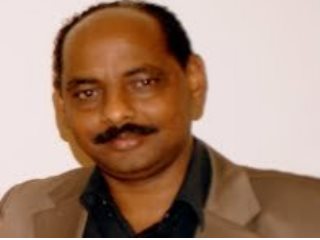 CDRiE - Citizens for Democratic Rights in Eritrea - is one year old. It is staging its first anniversary conference in London on January 9 to draw public attention to urgent problems such as the growing refugee crisis besetting Eritrea as well as questions of state and religion, land rights, ethnic diversity and governance, among other agenda items. Michael Abraha spoke to CDRiE’s chairman Suleiman Hussein via email and telephone and first asked him to reflect on what necessitated CDRiE’s inception a year ago.
Suleiman Hussein: Thank you Michael for this opportunity. Allow me to start by saying happy New Year to every Eritrean, at home and abroad. Before even it became what it is today, CDRiE initially started as a loose network of exchange of ideas among likeminded Eritreans residing in different parts of the Eritrean Diaspora. Many of us have been activists involved with existing organizations, some as members of political organisations while others were members of existing civic organizations. Among us are also a number of academics most of whom with no direct involvement in any organisation. Like most Eritreans, we started these discussions driven by our concern over the deteriorating conditions in our country and our desire to contribute in the ongoing struggle for change. The absence of basic rule of law in our country, the continuously deteriorating human rights conditions added to the growing disunity and mistrust among the political opposition with all its negative impact on the centuries-old social fabric of our society meant that the prevailing conditions posed an enormous threat to the very existence of our nation. These discussions which lasted for over a year and half were mainly centred around what we thought were the most challenging issues facing our country today and also exploring the best possible ways to contribute to the ongoing struggle for change. Out of this was born the idea of creating a worldwide civic organisation which would bring together a significant number of Eritreans from across the Diaspora. CDRiE is therefore created with sole purpose of becoming a catalyst for change.
Q: So, CDRiE was formed with the plan of expediting change. What major issues were identified and what ideas are being used to deal with them and how effective have they been?
A: As we continued our discussions, we noted that we had a common understanding on a number of issues of concern. One of these was the resort of some of our compatriots to violent means of struggle for change which in our opinion would lay the foundation for an endless bloodshed and civil war in our country instead of bringing about democracy and rule of law. As a civic organisation whose aim is to promote national unity, social justice and values of democracy, we thought we had a role to play here.
As part of our founding conference in January last year, we organised a well attended public seminar under the title of “the most challenging issues in Eritrea today”. For this we had invited a number of Eritrean academics many of whom are CDRiE founding members, to present papers on a number of issues of national interest. These included among other things, the advantages of non violent means of struggle to achieve positive change and sustainable democracy in Eritrea as opposed to violent means pursued by some. We also called for an all inclusive national dialogue as the way forward from the current predicament. Naturally, this was followed by a heated debate among Eritreans, especially on the cyber space; non violent means of struggle for change versus violent means and whether or not dialogue with the government was possible were some of the main issues discussed. The important thing is that this heated debate has brought a new dynamics into the political life and we consider this as a positive development. Today, we believe to have contributed to the debate which aims to making non violent means of struggle a viable means of struggle among many Eritreans.
Q: Non violence as an instrument of change tends to be controversial. How do you relate such view to the Eritrean situation?
A: As we speak, more Eritreans believe that the non violent means of struggle is capable of bringing about the desired change in Eritrea than those who think otherwise. If properly utilised, non violent struggle is a viable and proven means of struggle capable of bringing about democracy and rule of law and justice than any other means. There are many examples to that effect while no country has ever achieved a genuine democracy through violent means. Non violent means aims primarily to mobilise the silent majority of the population, especially the youth, in favour of democratic change in the country. This is very important as there could be no positive change without winning the support of ordinary Eritreans who are the main beneficiaries of democratic change in our country. It also aims among other things to win the support of the international community in favour of peaceful transition towards democracy and rule of law in Eritrea.
Q: CDRiE’s key role at the November Brussels conference on Eritrea and the Horn Region was quite apparent. The conference was commended by many and criticized by others. Why?
A: The recent Brussels conference was organised by Europe External Policy Advisors, EEPA, where the issue of human rights, democratisation and good governance in Eritrea was successfully brought to the attention of policy makers and influential NGOs within the EU and the USA. AS you mentioned, CDRiE was one of the participants and its participation was very much noted. I am aware that a lot has been said about this conference but believe me and as its concluding statement and all the conference documents show, the conference had a clear and simple agenda, i.e. aligning EU and US policies towards the Horn of Africa in general and Eritrea in particular for the promotion of human rights and democracy. The conference was therefore a major success for Eritrea as a whole and the pro democracy movement in particular. We are very grateful to EEPA for organising this conference and allowing Eritrean political and civic activists to participate and share their vision with high level officials from both the USA and the EU. I would like to take this opportunity to particularly thank Dr. Mirjam Van Reisen for the continuous support to the pro democracy movement in Eritrea. It is also important to remember here that the recent Brussels conference was not the first attempt in this regard. EEPA under the leadership of Dr. Van Reisen has organised similar events during the last two years.
Q: What other activities have you undertaken in the last 12 months?
A: Few months before the Brussels conference and soon after its launch, CDRiE had also participated at the 45th session of the African Human and Peoples Rights-ACHPR held in Gambia. CDRiE delegation was there and presented a memorandum prepared by CDRiE but co-signed by several civic organisations requesting the commission to adopt a resolution regarding the human rights situations in general and the political prisoners in particular.
CDRiE has also promoted by way of organising public seminars the concept of transitional justice in Eritrea which would be very important once the rule of law is restored. This is a relatively new concept which deals with one of the main challenges during the period of transition. One of CDRiE founding members has extensively written on the subject in the Eritrean context.
These are not the only achievements of the past year but I guess what I mentioned gives a glimpse of what the past year looked like for an organisation which is only a year old.
Q: I understand CDRiE’s first anniversary conference on January 9 in London is taking up the Eritrean refugee crisis as one of its main topics of discussion. How bad is the situation and what does CDRiE hope and plan to do about it?
A: As you rightly said, the refugee crisis is a major problem today. During the war of independence, it was estimated that about a quarter of our population were made refugees. Two decades after independence, many of these compatriots are still suffering in refugee camps in eastern Sudan while the government has been looking elsewhere. To make things worse, there is now this new mass exodus of mainly young Eritreans fleeing the ill conceived and open ended conscription under the guise of national service. Eritrea is now considered the second in the world for exporting refugees. Our youngsters are leaving the country in their thousands. Reports put the figure of those crossing the Sudanese border at around 2000 in a single month. About the same number is also crossing to Ethiopia. While the lucky ones make it to safe countries, the majority are leaving in dire conditions in inadequate camps in the neighbouring countries. As far as we are able to verify, they are leaving in camps where basic needs are totally lacking. Even worse is the fate of those who are perishing in the desert and the high seas. If this situation is allowed to continue, its impact will continue to be felt in our country for generations to come. What is to be done about this is the main question? While we should mobilise every effort to help our refugees wherever they are, and especially those in the refugee camps, we should not lose sight that the main solution lies in bringing to an end the root cause of this national disaster. For this to happen, we need to step up our struggle for democratic change in our country by focusing on the priorities of today.
Going back to the refugee problem and the forthcoming conference, we are primarily aiming to raise the awareness of the Eritrean Diaspora and international community about the plight of our refugees, especially those who are living in dire conditions in neighbouring countries and those perishing in the Sahara desert, in the Mediterranean, in Libya and in Egypt. There is also the problem of the unknown number of those who are arrested and detained by Libya and Egypt while on their way to a safe country. The UNHCR has not so far been of much help and this in spite of the much appreciated efforts of EHDR-UK and HRCE and others. We are currently working on a number of initiatives that would involve these and other Eritrean civic and human rights organisations as well as international NGOs. Our aim is to mobilise resources with the aim of providing at least some of the much needed concrete support.
Q: What are the other agenda items for discussion at the London conference and who have you invited to present and debate them?
A: Besides raising awareness regarding the plight of our refugees, the conference also aims to discuss other important issues such as Land Rights, State and Religions, National Languages and Diversity in Eritrea in the context of promoting national unity and peaceful transition toward democracy and rule of law in Eritrea. For this purpose, we have invited a number of scholars including Mr. Hassan Salman, Professor Gaim Kibreab, Dr. Yebio Woldemariam, Professor Kidane Mengsteab, Dr. Abdulkadir Dawood, Mr, Ahmed Suleimanm, Mr. Habtom Yohannes, and others. The information leaflets we have distributed provide information on the specific topic covered by these speakers. As in our previous conference, some of our invited speakers are not CDRiE members. The other important invitees are the wider Eritrean public whom we expect in significant numbers and to whom all those issues matter most.
Q: Where will CDRiE be in, say, the next two-three years assuming that might be the time it will take before principles of democratic rights are fully and formally restored and reinstated in Eritrea.
A: Well first of all, let us hope that it wouldn’t take that long before the democratic rights of the Eritrean people are fully restored. Having said that, I see the role of CDRiE and the entire civic movement for that matter as follows. The first, which is the current phase, consists of working towards the peaceful transition towards democracy and rule of law in our country, Eritrea. The second phase which is equally important is to continue its activities in Eritrea and work with all segments of the society to empower and involve them in the democratic process that will follow. The civic society movements’ role is very important for any functioning democracy. By becoming a watch dog of the entire political process they enable democracy and rule of law to be sustainable. As you may be aware, one of CDRiE’s main objectives is to create an Eritrean Think Tank which conducts studies on matters that affect Eritrea and the region. What we have been doing in this regard during the past year would therefore continue in the future with more focus on individual rights, human rights, minority rights, regional peace and integration etc. I see CDRiE becoming a formidable watchdog of the political process in future Eritrea.