[AI] Asmarino Independent

  • Create an account
    *
    *
    *
    *
    *
    Fields marked with an asterisk (*) are required.
You are here: Home News Analysis

News Analysis

Eritrea set to avoid harsh sanctions, still mistrusted

ADDIS ABABA (Reuters) - Eritrea has a strong chance of heading off new sanctions that could cripple the Red Sea state's economy even though it remains far from persuading its neighbours and the United Nations that it is not a destabilising force in the volatile Horn of Africa.

The United Nations is mulling more punitive measures against the secretive government of President Isaias Afewerki that include sanctions on the impoverished country's nascent mining sector and remittances sent from abroad -- both key sources of foreign exchange.

But Western nations see those sanctions hurting the population more than the government, while analysts say others including China and Russia typically oppose sanctions on African nations.


Eritrean Experience: Lessons to South Sudan

To avoid what we have defined as mistakes made by revolutionary Eritrea ...

I. Principle of the diminishing usefulness of revolutionary actors – At the end of the day, those who bring a nation into being – no matter the sacrifices they may have made, how heroic they may have been as warriors, whatever good intentions they may have – make poor managers of ongoing, developing states.

II. Principle of the importance of rational diplomacy and international affairs – South Sudan must develop a reasoned diplomatic agenda that achieves its national interests, as it defines national interest. ...


Why wait for politicians to oust foreign tyrants? Every one of us can do our bit

On its face, the Libya case seems to settle definitively a debate that has raged for most of the last decade, reaching its hottest point nearly a decade ago in the lead-up to the invasion of Iraq. Once again the two sides, interventionists and their opponents, have been saddling up and doing familiar battle against each other. Since last week's fall of Tripoli, it has been the interveners' chance to crow – taunting the anti-war crowd with the claim that, had they had their way, the colonel would still be riding around in his golf cart, wearing his phoney uniforms, having slaughtered any Libyan who had dared rise up against him. The discovery of farm buildings filled with charred human remains testifies to the dictator's cruelty but also to the apparent necessity of foreign military action. Without it, Gaddafi could have gone on killing.


How Eritrea’s strongman uses Kenya as a terror finance hub

In early July, as Kenya’s President Mwai Kibaki headed to Addis Ababa to chair a meeting of the Intergovernmental Authority on Development (Igad), a six-country partnership formed to address issues of drought, security and development in the Horn of Africa, he sounded a stern warning to Eritrea.

For Kibaki, a president who is not known for his love of dramatic public gesture, to adopt a hostile posture against another country, there must have been more to the issue than the government was revealing to the public.


President Isaias Afwerki Bars Winning Eritrean Soccer Team from Traveling to Kenya

After beating the Kenyan team 4 to 1 in the first round in Asmara, the Red Sea Camels are now prohibited from travelling to Kenya to play against the Kenyan U23 team. As a result, the Kenyan team is automatically advanced to the next round without having to play against a team that defeated it resoundingly.

The reason for the Grand Fool of Asmara’s decision is obvious: in 2009, the entire national soccer team defected in Nairobi, and he is now afraid that the same thing will happen. Given that, one wonders, why even participate in the first place? Well, the Grand Fool of Asmara was hoping that the Kenyan team woudn’t fail him. As in all kinds of gambles he takes, he works with no backup mechanisms in place: this retarded creature could only think one step at a time.
 

“Eritrea”: When a Mere Mention of a Name Becomes a Warning to Others

It is clear from the above that if the regime’s foot soldiers would do anything to deny the present, they would do everything possible to deny the past. They did the same thing when a massacre took place three kms away from Asmara in Adi Abeyto, where more than 50 young men were mowed down to their death. That is why asmarino made it its task to build a monument for the fallen, with their names inscribed in each stone. We need to erect a similar monument now, with all the 300+ names inscribed, to remind the regime and its followers that we will neither forgive nor forget this atrocious crime committed against the youth of Eritrea.


Analyses: the Nature of Libyan Unrest and Its Regional Impact

Most experts say that how events play out in Libya will depend far more on domestic political factors than outside influence. The lesson of Egypt and Tunisia, they say, is that autocrats fall when they can no longer command the security forces to restore order.

 "A major factor is the commitment of those prepared to carry out violent repression," said Nikolas Gvosdev, professor of national security studies at the US Naval War College. "In Egypt ... the rank and file military were not going to follow through with what needed to be done to secure Mubarak's political survival."


Strategic ramifications of the Egyptian crisis

Equally importantly, the interregnum in Egypt will mean a cessation of Cairo's support for Eritrea and the proxy war which Eritrea facilitates but which others, particularly Egypt, pay against Ethiopia through the arming, logistics, training, etc., of anti-Ethiopian groups such as the Oromo Liberation Front (OLF), the Ogaden National Liberation Front (ONLF), etc. Overall security of the Red Sea states and SLOC: Egypt has been vital to sustaining the tenuous viability of the state of Eritrea, because Cairo regarded Eritrean loyalty as a key means of sustaining Egyptian power projection into the Red Sea (and ensuring the security of the Red Sea/Suez Sea Lane of Communication), and to deny such access to Israel. Absent Egyptian support, the Eritrean Government of President Isayas Afewerke will begin to feel its isolation and economic deprivation, and may well, on its own, accelerate new pressures for conflict with Ethiopia to distract local populations from the growing deprivation in the country.


Eritrean Refugees and Israel’s Infiltration Prevention Bill

Israel’s 1954 Prevention of Infiltration Law was enacted to criminalize fedayeen freedom fighters, deny Palestinians their right of return, and deport them if they came. Now there’s a new proposal to replace the old law, the Infiltration Prevention Law, one the Association for Civil Rights in Israel (ACRI) calls “one of the most dangerous bills ever presented in the Knesset.” If passed, Israel’s international law obligations will end under proposed provisions to imprison refugees for up to 20 years, even if they committed no crime, or summarily deport them to potential death in home countries. In addition, human rights organizations and activists helping them may also be criminally prosecuted.

Besides mocking democratic freedoms (including for Jews) and international laws, this bill takes Israel one step closer to fascist rule, an accelerating track fast with each new policy.

 
President Omar Hassan Ahmad al-Bashir & President Issias Afewerki

Eritrea: President Isaias Afewerki of Eritrea orders news blackout on democratic elections in Sudan

The Isaias regime is in a dilemma. Its friends are getting fewer and fewer. It doesn’t want to offend the only “friend” it has in the region, even though the relation between the two despots – Beshir and Isaias – has been tumultuous, at best. Now that both of them have been rendered pariahs by the world community, the former for his role in the genocide of Darfur and the latter for his sponsorship of terrorism in the region, they are looking for solace in each other’s arms. At this particular moment, Isaias Afwerki cannot afford to antagonize Sudan by ridiculing its elections. But neither can he extol it. Hence, his preference for complete silence and his order for a complete blackout on the elections in the Eritrean media.
 
The main reason why he cannot allow the Eritrean media to say anything positive about it, left alone extol it, is obvious: he doesn’t want his subjects to get “dangerous” ideas in their heads. He doesn’t want them to think that if Sudan, with its plethora of problems (civil war, religious and ethnic strife, fundamentalism, genocide, etc.) can conduct democratic elections, why not Eritrea. This being his worst nightmare, he will do anything to prevent that


Eritrea: Twenty Four Workers Massacred in a Gold Mining Area

It is no surprise that the latest tragedy in Eritrea has to do with the mining projects that are sprouting all over the land –  be it directly or indirectly. Selfi Democracy Eritrea has reported that on Thursday, April 08 and Friday, April 09, 2010, in the god mining areas of Hademdem and Fankon in the Gash-Barka region, in the altercation and scuffle caused by an unwarranted round up conducted by the Eritrean government to forcefully conscript workers into the army, one soldier was killed instantly. In retaliation, the Isaias regime unleashed a reign of terror for two days that killed 24 of those working in the mining area; and in its aftermath, there is a great tension building up in the surrounding area.
 
There are two vital pieces of information that are missing that we need to know to get the whole picture right, and both have to do with the nature of the mining project itself: Are any one of the number of Western mining companies involved in this mining project? Or is it one of those areas where locals are frequenting to extract gold on their own initiative? Either way it doesn’t bode well for the Western mining companies to be associated with such a brutal regime, especially since the tragedy has to do with the unscrupulous gold rush.

   
  • «
  •  Start 
  •  Prev 
  •  1 
  •  2 
  •  Next 
  •  End 
  • »

Asmarino

ኣዝማሪኖ (ትግሪኛ)

ICER Alert on Afar

ICER Alert on Afar

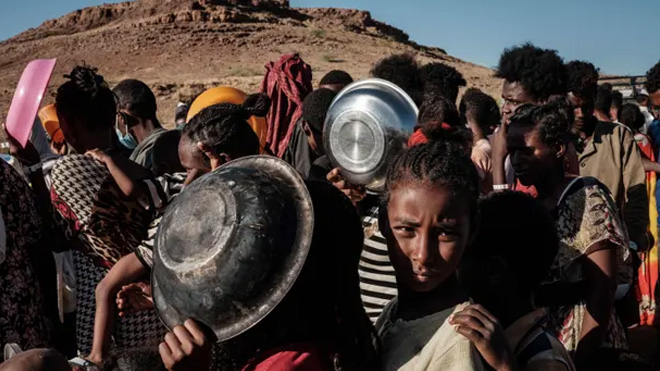
There is human catastrophe unfolding in Yemen  at this very minute. Two hundred and forty four Eritreans ninety five percent of whom are Afar citizens of Eritrea are in prison some for almost one year. Their crime is simply for entering Yemen without document. Their claim for political asylum until situation at home is improved was completely ignored by the Yemeni authorities and the UNHCR is on the sideline simply watching helpless.

As it is true with most Eritreans, this particular ethnic group is driven out of their traditional areas, prevented from leading their subsistence existence which is fishing on the Red Sea and forcibly conscripted in the open ended military National Service which has become scourge ....

Read more...

Desperate Situation of Eritrean Afar Refugees in Yemeni City of Al-Hudeyda

Desperate Situation of Eritrean Afar Refugees in Yemeni City of Al-Hudeyda

Regrettably, the 300 Afar refugees are languishing in Al-Hudeyda prison where their lives are trapped in a serious threat. Apart from consistent warnings of forcible return to Eritrea, they are facing communicable diseases caused by contaminated food and water. Amongst them are around 50 Afar refugees are in a grave danger of losing their lives to this disease outbreak.

Unfortunately, the ongoing political uncertainty in Yemen exasperated the situation of Red Sea Afar refugees. Going on almost a year in captivity, they haven’t had any access to UNHCR and Human rights organizations, representatives of Yemeni government or any access to medications and basic needs, which is guaranteed to them under UN Geneva convention on rights of refugees.

Read more...

Yosief Ghebrehiwet on Smerrr Paltalk on Saturday, May 12

Yosief Ghebrehiwet on Smerrr Paltalk on Saturday, May 12

On Saturday, May 12, at 12:00 PM (Los Angeles Time) or 21:00 (Berlin Time) Yosief Ghebrehiwet will give a presentation at Smerr Paltalk. The topic is "The Fallacies of the Democracy Project and Nationhood in the Eritrean Context" In this presentation, the following points will be discussed:

  1. What is wrong with the Democracy Project as practiced by the Opposition? On this part, more than a dozen fallacies will be discussed.
  2. After discussing the notion of "nationhood" in the Eritrean context, this question will be addressed: What is being done to hold Eritrea together as a nation?
  3. After looking at the rationale of the past (the Eritrean revolution) and the present (the opposition) movements regarding (1) and (2), we will look at this question: Given the above fallacies and failings, how do we anchor the Eritrean nation in the future?


Read more...

ICER APPEAL: Save Eritrean Refugees from Human Smugglers

ICER APPEAL: Save Eritrean Refugees from Human Smugglers

The International Commission on Eritrean Refugees (ICER) would like to appeal to all the political groups in particular to those whose operational base is Ethiopia to give focus on the issues affecting refugees in particular to the shady operation going on in the refugee camps. Frankly, since their base of operation is located stone throw away from Eritrea where the bulk of the refugees originate from we believe they are better placed than most of us to influence events, at least in as far as regulating the flow of persons from the refugee camps in Ethiopia and the Sudan. ...

This being the case, therefore, why is it so difficult for the political parties and in particular those operating from Ethiopia where part of the illegal activities is occurring cannot act in earnest to stop it?  Is it because  they are too preoccupied dealing with the more burning issues, for example, the overthrow of the unrepresentative regime and replacing it with democratic one? ...

Read more...

Support AI


Buying Time Eyewitness Account Blood Money News Analysis Editorial Writers' Corner News Articles Press Releases Latest