


![[AIM] Asmarino Independent Media](/images/logo/ailogo.png)
Eritrea and Isaias Afewerki: a cold logic
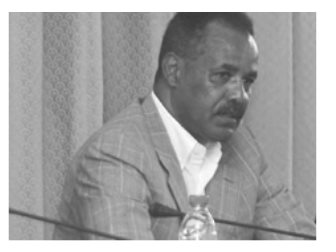 The achievement of Isaias Afewerki’s regime in Asmara is to have used confrontation with its neighbours to entrench its survival. It is a political lesson that the international community still needs to learn, says Selam Kidane.
It is a rare form of success for a small country to engage in perennial disputes with often larger and more powerful neighbours yet to survive intact. Even more so for the leadership of this country to reinforce its own power in the process. This is a rough but workable description of the experience of Eritrea under President Isaias Afewerki since the country's independence from Ethiopia in 1991, and especially in the decade after 2001. This experience is also a unique case-study in African - and perhaps world - politics; a painful reality to those many Eritreans who have endured repression and exile under Afewerki’s rule; and a challenge to the international community to understand the kind of leader and state it is dealing with.
The issue of sanctions against Eritrea is one of many entry-points to understanding the character of the regime. The United Nations Security Council (UNSC) had adopted Resolution 1862 on 14 January 2009, criticising Eritrea over its role in a dispute with neighbouring Djibouti in June 2008 and subsequently. After Eritrea failed to comply with its provisions, the UNSC passed a second resolution on 23 December 2009 which imposed an arms embargo, and travel-restrictions and an asset-freeze on several of the country’s political and military leaders. The grounds for the decision were that Eritrea had failed to withdraw its forces from Djibouti, and had provided support to armed groups in Somalia.
The UNSC voted for Resolution 1907 by thirteen-to-one; Libya stood against and China abstained. The decision was itself the outcome of a long process in which Eritrean high officials had long denied the very existence of a problem in characteristic fashion, by responding to “accusations” by condemning the United States for “orchestrating” a “fabricated conflict” in order to “‘create turmoil” and thus “have an excuse to managing the ensuing crisis”. Now the Asmara government, its embassies across the world and its supporters in the Eritrean diaspora responded to the sanctions that followed in equally characteristic fashion: with denial, dismissal, and disdain.
Eritrea had spent all of 2009 in an effective standoff with the UNSC; during this time it made nine representations to the council - rejecting its charges, refusing requests for a fact-finding mission to examine the Djibouti conflict, and charging the council and the US of diverting attention from more important concerns (especially Eritrea’s unresolved border with arch-rival Ethiopia). This abrasive stance had the effect of pushing the council - and even the European Union and the African Union - towards a more critical stance in relation to Asmara (see Edward Denison, “The Horn of Africa: a bitter anniversary”, 12 April 2007).
In the end, Uganda that pushed the draft resolution, with support from the Inter-Governmental Authority on Development (Igad, the regional economic alliance); China and Russia, which as permanent members of the Security Council chose not to block it; and Libya’s presidency of the council was no help to its Eritrean ally.
To many Eritrea observers, the events of December 2009 heralded the end of the era of “quiet diplomacy” that had long enshrouded the international community’s treatment of all matters Eritrean - and prevented a proper airing of the many human-rights violations perpetrated by the government of Isaias Afewerki. And perhaps the most notable aspect of this welcome change was that it marked a refocusing of the European Union’s policy.
A good listener
The European Union, and especially its former commissioner for development Louis Michel, had long sought to engage Eritrea with a view to enabling it to play a positive role in the region. In pursuit of this ambitious effort, Michel received President Isaias “warmly” in Brussels in May 2007; he called the occasion “an important event, an international signal for the EU and for Eritrea” that could open the way to a new partnership. In this approach, Louis Michel and the commission had to ignore mounting evidence of Eritrea’s appalling democratic and human-rights record (see “Isaias Afewerki and Eritrea: a nation’s tragedy”, 22 June 2009).
The EU pledged development-fund aid worth $180 million to Eritrea, none of which has made any tangible contribution to the stability of the Horn of Africa - far less to advancing the rights of Eritrean citizens. If anything, these deteriorated further during the period, while there was no perceptible change in Asmara’s unique brand of aggressive diplomacy.
The widening gap between the promise of May 2007 and any visible achievement grew. If one single incident helped to force a crack, it was the case of Dawit Isaac, a Swedish-Eritrean journalist held in prison - incommunicado, without any due process - since September 2001. The issue became more high-profile under Sweden’s presidency of the European Union in July-December 2009, when requests for Dawit Isaac’s release were snubbed. In October 2009, Britain followed the United States in calling for sanctions against Eritrea; and Louis Michel himself admitted at a hearing of the European parliament on 9 December that relations with the Eritrean president had become more rather than less difficult in recent years.
Michel’s unexpectedly frank speech even offered an insight into President Isaias's character - including his ability to filter the perspectives of others right out of the equation, reflected in his endless monologues about redundant or technical issues. It sounded as if Michel had all but given up on attempting to “engage” Eritrea, thus belatedly recognising a reality that Eritreans at home and in exile had lived with for many years.
Between home and abroad
The UN sanctions, then, were something of a turning-point; though to criticise Eritrea for its combative regional role is still far from registering the full range of its challenge to international accords and norms. These include the imprisonment of journalists, civil-society activists and political opponents; the suppression of independent media and religious groups; and as the forced and indefinite militarisation of young people. Several institutions had raised concerns about these issues, including Eritrean human-rights groups (such as the Eritrean Global Solidarity coalition), Reporters without Borders, and Human Rights Watch. The African Union and the Inter-Parliamentary Union (IPU) also appealed for release or due process in the case of eleven ministers and officials arrested in September 2001 after calling for reform.
There have also been some few steps at government level. In September 2005, the United States designated Eritrea a “country of particular concern” for its religious persecution, and imposed its own sanctions. In May 2010, the US Commission on International Religious Freedom (USCIRF) recommended further targeted sanctions against Eritrean individuals and institutions complicit in serious human-rights abuse. In January 2010, the European Union began to review the aid it had disbursed to Eritrea since 2007. EU officials even responded to enquiries on Dawit Isaac’s ongoing imprisonment by indicating that they recognised a connection between Eritrea’s serious domestic violations and its regional activity (see Ben Rawlence, "Eritrea: slender land, giant prison", 6 May 2009).
The rule of whim
Then, as the implementation of sanctions proceeded, and the first six-month reporting-cycle on Eritrea’s compliance approached in June 2010, there seemed a break in the ice. Asmara agreed a peace-deal with Djibouti, brokered by Qatar, which was broadly welcomed - and led to a flurry of reports that Eritrea was softening its foreign policy.
It looked like good news. But there is a catch. The Eritrean regime can, in the absence of any semblance of accountable governance or rule of law, enter into and renege on agreements at will - with no consultation, scrutiny or public follow-up whatsoever. In June 2008, when Eritrea decided to resolve its border issue with Djibouti via confrontation, no one in the country knew what was going on; the independent media had been silenced since 2001, the parliament hadn’t met since 2002, and if more than seven Eritreans wanted to gather they would need special permission from government. So when in June 2010 the government decided to resolve the same issue via third-party mediation, again no one had a clue as to how that came about; nor will they if Asmara has any other problems it wants to sort out by force.
This is the cold political logic at Eritrea’s core. Isaias Afewerki may have been pressed by UN sanctions into a rare concession, but this changes nothing at the heart of the matter: the impunity of his regime at home and abroad. The international community needs to understand that among the many ingredients of long-term peace and stability in the troubled Horn of Africa, citizens’ rights and legal order in Asmara are very high on the list.
[published in opendemocracy.net]