[AI] Asmarino Independent

  • Create an account
    *
    *
    *
    *
    *
    Fields marked with an asterisk (*) are required.
You are here: Home Articles More from Eritrea seek life of peace in Maryland
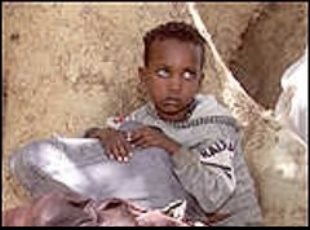
More from Eritrea seek life of peace in Maryland

Write e-mail Print

They had come to the two-room stone house where Abeba Hagos Enday lived with her four children to conscript her husband into the Eritrean army. When she told them - truthfully, she says - that she didn't know where he was, they gave her an ultimatum: Find him before we come back, or we will kill you.

"I had to leave," Enday says through an interpreter.

Enday, 39, is one of about four dozen Eritreans who have arrived in Baltimore since July, the first members of a group that resettlement officials expect to rival the current big three - Iraqis, Bhutanese and Burmese - in admissions during the next year.

"This population is coming," says Robert Warwick, director of the Baltimore office of the International Rescue Committee, which is resettling the Eritreans locally. "For years, resettlement was stagnant, but now the U.S. government has identified numbers, and they're being processed."

The Eritreans, many of whom have limited education and speak little or no English, arrive in a job market that is challenging for Americans. So far, only a few have landed jobs - one in retail, others in a sporting-goods warehouse. But two Eritreans who agreed to be interviewed said their pros- pects here were better than back home. They have fled what an Rights Watch" target="_blank">Human Rights Watch described this year as a human rights crisis in the African country, where a repressive dictatorship is accused of arbitrary detentions, forced labor and torture. Using a border dispute with Ethiopia as a pretext, President Isaias Afwerki has suspended elections, outlawed opposition groups and arrested journalists.

The United States, which typically accepts more refugees annually than the rest of the world's nations combined, took in more than 1,500 Eritreans during the 2009 fiscal year. Countries in which smaller numbers are being resettled include Canada, Australia and New Zealand.

Fifty-three Eritreans were resettled in Maryland, where it is hoped that they will connect with the large Ethiopian community in Washington. While Eritreans fought a war of independence with Ethiopia from 1961 to 1991 and the countries waged a border war from 1998 to 2000, their peoples see themselves as brothers and sisters. Ethiopia is a common destination for Eritreans fleeing their country.

Local staffers of the International Rescue Committee pick them up at BWI- Thurgood Marshall Airport, take them to apartments stocked with food and help them with shopping, health screenings, English classes, job training and legal services. But funding is limited, making it crucial that they find paying work as soon as possible.

Warwick, who headed IRC operations in Eritrea for two years until the government ejected international aid groups in 2006, sees hope.

"We find that they're very energetic - they're anxious to get that first job," he says. "This is a serious group of people about work and about education."

One former soldier, who was imprisoned as a dissident in Eritrea, says he will do any kind of work.

"I'm more inclined to physical labor," says the man, 45, who spoke on condition of anonymity. "Because I was not educated, I'm willing to work any job. I'm eager to start right away."

Warwick also sees cause for optimism in what he says is a growing cohesion among the Eritreans. Unusual for a new population, some have asked to join IRC staff in picking up arrivals at BWI.

"These are people that they didn't know, but they wanted to show support," Warwick says. "We don't usually see this, where someone's just come in, a month, two months ago, and already they want to go out and greet. ... It was just a great thing for the arriving Eritreans to feel like they've got a connection right away."

The IRC is resettling Eritreans near one another in Northeast Baltimore in the hope of fostering a community.

Enday, who helped her husband run the family farm in Eritrea, says she feels safe in the United States. But she misses the child she couldn't bring with her.

The woman says she begged her husband to escape Eritrea after police threatened her, but he refused. So she left in October 2006, taking two of their children while her husband was working, slipping across the Ethiopian border to leave them at the United Nations refugee camp at Shimelba, then going back for a third.

She says she was unable to take their fourth child, an 8-year-old boy. She feared that she would be arrested if she attempted the trip again.

She spent 2 1/2 years at the refugee camp before coming to the United States in July. She said she has had no communication with her husband or son since leaving Eritrea.

"I don't know if they survive," she says, her eyes welling with tears. "My husband might have gone to another wife. He might have started a new life."

She is hopeful that her husband and son will make it to Shimelba, where she has left their names and her destination with camp officials. She has no plans to return to the region.

"Living here in the United States is much better than where I was, with no rule of law, where anyone can do anything to you," she says. "At least you can sleep in peace. You will not starve here.

"If my country gets rid of this dictator, then definitely I will go back home. If it is a land of peace."

Copyright © 2009, The Baltimore Sun


Add comment

Security code
Refresh

Asmarino

Eritrean Youth Call for Friday Protests Inside the Country

Eritrean Youth Call for Friday Protests Inside the Country

January 31, 2012 - Eritrean youth across the globe are calling their counterparts inside the country to demonstrate their outrage at the human and democratic rights abuses by emptying the streets in towns and cities throughout the country every Friday evening starting Friday 3rd of February. The call that has been transmitted through electronic communication and social media has so far been received positively by Eritreans inside the country.

Read more...

Eritrean-Ethiopian Frienship Forum

Eritrean-Ethiopian Frienship Forum

Ethiopian & Eritrean Friendship Forum (EEFF) is holding its fourth annual conference on March 24th, 2012. Building on last year’s success, this year’s theme is "Healing Past Wounds -- Building Our Future Together", a critical idea to focus on in this increasingly competitive global economy.

We are sending this announcement to the wider Ethiopian and Eritrean community for two reasons:
- to invite as many people as possible to attend the conference. Be part of the solution!
- to invite thought leaders to share their views as panelists.


Read more...

The son of a Priest thinks that God is his Uncle.

The son of a Priest thinks that God is his Uncle.

The demonstration called by Mr.  Kyriakakos et.al is not an isolated incident.  Even though on the surface it appears that it was in reaction to the WFP articles, but none the less it is not.  It was part and parcel of the series of demonstrations and seminars that suddenly erupted in the month of December 2011 called “Hizbawi Mekete” (National Rebuff) to object the sanctions on Eritrea that was being debated at the UNSC and show to the international community that the Eritrean government enjoys the full support of its people.  The instruction to demonstrate and hold public meetings and seminars was issued by the office of Mr. Yemane Gebreab, political advisor to the President of Eritrea and in charge of the “Hizbawi Mekete”.

Read more...

Melbourne Rally 2012: For How Long Can You Remain Silent in the Face of Oppression?

Melbourne Rally 2012: For How Long Can You Remain Silent in the Face of Oppression?

As in previous years, we call on the Diaspora communities living in the free world that have chosen to be silent in the face of oppression and the ever growing injustice committed against the Eritrean people to fight for the people's rights. We remind you that you are morally obliged and duty bound to speak for the Eritrean people and to stand-up against injustice. We remind you the freedom that you enjoy are the outcomes of sacrifices paid by people who believed in liberty, freedom, justice and democracy. So, why don’t you demand for the Eritrean people the same civil rights that you are relishing? We encourage you to be part of the struggle for democratic change?


Read more...

Support AI


The Legal Struggle against PFDJ - Part 3

The Legal Struggle against PFDJ - Part 3

We are dealing with a government that is deliberately supporting terrorism in the Horn of Africa. Moving forward we have to assume that American policy vis-à-vis the regime in Asmara has to be anchored on demanding the government of Eritrea “...must cease all violations of prior UN Security Council resolutions”. What can we infer from this precise documentation by the US Embassy (extension of the State Department) in Asmara? One thing is sure: it is not a perfunctory PR posting.  The statement has substance and backbone. We can be cautiously optimistic in moving forward to access various US government departments, which share the responsibility of implementing (domesticating) this prolific summation into actual concrete policy based on the tone and seriousness of the statement.

Read more...

The Legal Struggle against PFDJ – Part-two

The Legal Struggle against PFDJ – Part-two

It is their Actions (from the perspective of extended observation) in violation of the law of the land and the international law that has to be the basis of identifying the possible agents of the regime.  We cannot do this with personal or political vendetta in mind. ...

Without information we cannot be engaged in a nuanced legal struggle against a mafia regime. Up to now they had the luxury of intimidating our community at large and imposing the political will of the brutal regime on our communities directly and indirectly while they have taken citizenship in the countries of their residence and sworn to uphold the law. This game has to come to an end. They had a free ride up to now because we were partially timid or were contained by cultural modalities and restraints. We must get to know the law as well as they must get to know the law.

Read more...

Sanction Watch: Not a Penny for PFDJ

Sanction Watch: Not a Penny for PFDJ

Our struggle in the Diaspora now has reached a different phase: the legal phase. We have to deploy all legal instruments to destroy, expose, checkmate and minimize the widespread illegal activities of the regime and its surrogates in each country, states, and counties where we reside. We have to identify and understand the exact role of the specific institutions and departments that have been set up or are designated to implement all UNSC resolutions on a national level. This potent approach is at our disposal. Peaceful struggle includes this kind of proactive deployment of mind, intelligence and heart.

Read more...

The Detained Patriarch, Persecuted Christians and a Dying Church

The Detained Patriarch, Persecuted Christians and a Dying Church

As the Patriarch of Eritrea, he was much concerned and resisted the growing interference of government in religious affairs. His strong resistance of to excommunicate three thousand members of the Medhane Alem, an Orthodox Sunday School movement as well as his demands that the government should release imprisoned Christians accused of treason are considered to be some reason for his rivalry with the Eritrean government. The Holy Synod sided with the government and during January 2005 a secret session was met and they removed all executive authority of the patriarch who was limited to just officiating church services. The Holy Synod sought the support of Pope Shenouda to excommunicate Abune Antonios, but the Pope refrained from such an act.

Read more...

In the battle to empower people – Kassahun Chekole is simply an inspiration

In the battle to empower people – Kassahun Chekole is simply an inspiration

It is within the context of the Eritrean reality of today where freedom of expression is banned that Kassahun’s work in spreading knowledge and information becomes inspirational.

The ban not only denied the population to tap the wealth of knowledge essential to their social, political and economic advancement but also eroded the self-esteem the Eritrean people had and the good values they cherished in the past.  It is a blow to the historical depth of the people of Eritrea in politics and the armed struggle and the richness of their culture.

Read more...
More:

Buying Time Eyewitness Account Blood Money News Analysis Editorial Writers' Corner News Articles Press Releases Latest